Taking away the Lion’s mane in the Donald, would be like castration for him as he wouldn’t be able to function but he has a good looking skull shape for a balding man.

from WRassman,M.D. BaldingBlog https://ift.tt/2ZgxHQF

Taking away the Lion’s mane in the Donald, would be like castration for him as he wouldn’t be able to function but he has a good looking skull shape for a balding man.
1- Your hair thickness (fine hair has 1/4 the value of coarse hair) so the calculations are different based upon hair thickness
2- Your hair density in the donor area: We are all different with different hair densities. The density reflects the donor bank so if you take out say 3000 grafts, and you only have 3000 to donate, then you have used up your reserve. A good doctor will tell you how much hair you have in your donor bank and as you use it, how much remains.
3- What can you expect in the future as hair loss is progressive. Today, for example, you have some frontal loss and you transplant it with 2000 grafts. In a few years maybe you have more frontal recession behind the area that was transplanted and you also develop some early crown loss. If you transplant these two areas, then maybe in time, the crown loss will become more and wider, what do you do then? Did you leave enough hair in the donor bank to manage future hair loss?
The hair transplant conundrum is not so simple as a graft calculator can easily solve. A good doctor who has experience, will address this for you and give you a realistic assessment of your short term and long term needs. I always tell my patients don’t think a year out, because balding is a lifetime problem.
HOW MANY GRAFTS Do You Need? Try this 30 Second GRAFT CALCULATOR! from tressless
When we think of treatmetns for hair loss, we typically divide them into groups accordingly to their safety and efficacy. We generally call the starting treatments “first-line” treatments, and treatments that we might consider down the road if first-line treatment do not prove helpful as “second-line” treatments followed by “third-line” treatments.
To earn the rank of being considered a “first-line” treatment for any given medical condition is a privilege that comes only with time and only with demonstration of the treatment being effective in repeated high-quality, independent medical studies. There is an incorrect perception among many physicians and much of the general public that new treatments automatically become first-line treatments. All new treatments start off as second-line or third- line treatments and must proceed to then earn their place at the top of the list as first-line treatments. If they are truly superstars, this upward promotion will happen rather quickly.
I’m 18 and I’ve had diffuse thinning for the past 3 years. Yes it sucks but it’s slow and still have decent amount of hair. I’ve noticed for the past 3 years that when ever I get a hair cut, my hair is easy to pull out. Same with sides and my back. Is this DUPA? I’m really worried because I hope it isn’t. I took pictures with the flash and it’s still thick. Also when my sides grow out, I try pulling on it and it doesn’t come our. WTF.
I am the doctor who defined DUPA and it is rare. You need to have a microscopic examination of your donor area if you want DUPA eliminated as a diagnostic possibility. Most hair transplanted doctors offer this.
I just got my first box of finasteride 1 mg today. I wanted to get minoxidil 5% as well, but I need a prescription for that where I live. However, my dermatologist said the action of finasteride and minoxidil isn’t synergic, and that I won’t get better results by adding topical minoxidil to oral finasteride. That’s the opposite of everything I’ve heard so far. Men do combine oral finasteride and topical minoxidil 5% exactly to get better results, don’t they?
I don’t agree with your dermatologist. These two medications have different modes of action so taking them in combination, especially for the crown, is more effective.
I’m often asked if Chronic Telogen effluvium causes people to develop androgenetic alopecia. The answer is no - with the exception that CTE can speed up the arrival AGA if a person was predisposed to develop it anyways. The main point is that the person would likely have developed AGA at some point.
Chronic telogen effuvium is a hair shedding condition that typically develops in women age 35-70. Women report the condition to a much greater extent than men. Women develop increased hair shedding that can sometimes be quite profound yet at other times be quite minimal. The condition can go on for many years. In most cases, a trigger can’t be clearly found although there may be many best guesses. Patients with CTE may have a variety of symptoms including itching, tingling, burning and soreness when the hair is moved.
The Sinclair study is an important study which helps us provide patients with clearer answers as to whether or not CTE causes AGA. Professor Rodney SInclair studied five women diagnosed with chronic telogen effluvium and followed their photos for a minimum of 7 years. Four of the 5 women continued to shed year after year after year and shedding fluctuated in severity. However, serial photographs over time showed no visible reduction in hair density, and serial scalp biopsy specimen showed no follicular miniaturization. These 4 women showed no tendency toward development of female pattern hair loss or to spontaneous improvement. One woman however was diagnosed with female pattern hair loss.
Considering that 40 % of women in the general population develop AGA, this study has important implications. This study reminds us that CTE does not simply cause AGA and that CTE does not cause hair to thin and thin over time. For patients who have the correct genetics, CTE might speed up the arrival of AGA. Instead of developing AGA at age 47 a patient with CTE might, for example, develop visible AGA at 45. But it’s important to take note that this patient likely would have developed AGA anyways.
Sinclair R. Chronic telogen effluvium: a study of 5 patients over 7 years. J Am Acad Dermatol. 2005 Feb;52(2 Suppl 1):12-6.
Those who are interested may wish to review these previous articles on CTE.
Do I have chronic telogen effluvium (CTE) ?
Chronic Telogen Effluvium: Most patients don't develop AGA
Acute and chronic telogen effluvium - what's the difference?
Scalp symptoms (burning, tingling, pain) and chronic telogen effluvium
Chronic telogen effluvium vs Genetic hair loss - Easily confused !
Acute vs Chronic Telogen Effluvium: A Closer Look
Oral Minoxidil for Chronic Telogen Effluvium
Steroid injections are generally well tolerated and have a good safety profile for most when the correct concentration and dose are used. Atrophy or small indentations or depressions in the skin are side effects that can sometimes occur with steroid injections. They are temporary in nature but it is important that one does not continue to inject in the area if atrophy is present. Injections need to be postponed in the area of atrophy if indentations are noted. Once the scalp improves back to normal in that area we can often continue the injections.
The presence of atrophy does not mean that injections need to be stopped altogether only but do indicate that injections need to be stopped in the area of atrophy. If there are only 1-2 indentations, then it may be possible to simply avoid injections and continue injections in other areas that require injections (at a lower dose). If there are 3 or more indentations, I recommend waiting 6-8 weeks to have the skin improve before attempting injections again. When injections are restarted, I recommend that a lower dose be used.
One must always consider the dose of steroid that was used. Some physicians use 10 mg per mL which has a higher chance of causing atrophy than 5 mg per mL. Some physicians use 2.5 mg per mL or 3.3 mg per ML which are both common doses that I use in many patients. A patient who gets atrophy from 10 mg per mL might still benefit from 2.5 mg per mL and so steroid injections need not necessarily be totally abandoned. Of course this is handled on a case by case basis.
For any patient with atrophy, one must also consider just how much topical steroid is being used. A patient who is using extremely large amounts of high potency topical steroids may be more likely to get atrophy if injections are then performed as well.
Below is a common algorithm for dealing with atrophy from steroid injections.

Folliculitis decalvans is an uncommon scarring alopecia. The cause is not entirely known although it is often associated with the presence of bacteria such as Staphylococcus aureus. Patients experience itching, burning and tenderness in the scalp and often have pustules. The hair loss that the patients experience is often permanent.
The mainstays of treatment to date are oral and topical antibiotics to eradicate the Staphylococcus aureus as well as treatments such as oral isotretinoin. A variety of other treatments have been reported with limited success. Fat transplantation involves the isolation of fat stem cells by liposuction type procedure form the thigh or abdomen. These procedures are not well established yet and have little in the way of good evidence. Some countries, including Canada, have banned these procedures altogether in order to protect the public until more evidence is available. Canadian physicians and other specialists face the possibility of losing their licenses were the to participate in these procedures. But the procedure continue in other countries and are flourishing - even without good evidence. I continue to follow the data and evidence on these procedures for hair growth in various types of hair loss.
I was interested in a 2018 paper citing use of autologous fat transplantation as a source of stem cell therapy for folliculitis decalvans. The patient in the study underwent two session of adipose transplantation 5 months apart. After treatments it was noted that the patient had no new pustules and no longer had pain or burning sensation in the affected area. There was some hair regrowth noted at the periphery of the area.
This is an interesting and potentially promising study. Many studies in scarring alopecia suffer greatly from lack of long term follow up. Folliculitis decalvans for example can undergo periods of relative quiet followed by increased activity. It is essential to know if this patient for example maintains a good response after 1, 2,3 and 4 years. In addition. a lack of pustules and reduction in symptoms is a very good sign but what matters most is the appearance of the scalp at various intervals following treatment. Nevertheless, this is an interesting paper and likely will fuel additional studies of these therapies in scarring alopecia.
Patients should be aware that these therapies for folliculitis decalvans (and other types of hair loss) are experimental at best and likely do not provide the same degree of benefits as do standard therapies. They do however offer a new means of treatment and provided these prove safe in the long run, a novel means of harvesting one’s own stem cells as anti-inflammatory and hair growth promoting agents.
REFERENCE
Tedesco M. Adipose tissue transplant in recurrent folliculitis decalvans. Int J Immunopathol Pharmacol. 2018 Mar-Dec.
They say you can get a transplant once you’ve stabilized your hairloss with Fin – but how reliable is it actually? I’m not sure how accurate this is, but I often read that Fin doesn’t really halt your hairloss, it slowns it down a lot but your hairline is still receding. And who’s to say that you get you a transplant and, 3 years later, Fin starts losing effectiveness and you end up looking even worse before? Do you just have to gamble on this, or am I missing something? Or is the transplant a commitment in the sense that you’ll eventually need more to “recorrect” everything?
What are you realistically getting in the long term with a hair transplant?
I have been doing hair transplants for 28 years and started the trend with small follicular units used for the hair transplants. Many of my patients from 28 years ago, come and visit me and a few came back for more hair transplants as they continued to lose hair. In good hands, hair transplants work and in 99% of people, the results are permanent. That is good and bad because if it is done well, you will look good, but it is done poorly, you will always look freaky.
It takes about a year to get any reasonable results from either minoxidil or finasteride. Stick to it if you go that way

Nice early results. It shows the impact of finasteride and minoxidil used in combination. The impact on the crown is clearly better than on the front, but both are better. It is unusual to see results in just 3 months but because he kept his hair short, the new hair impacted by the finasteride and the minoxidil showed better. If his hair was longer, then he may not have seen the value as quickly because only the hair close to the scalp was helped by the finasteride and the minoxidil.

I have been on Fin 1mg for last six months. I have started observing that my Hair, Armpit Hair, Pubic Hair and Facial Hair have started thinning and the density & growth has reduced. Could this be related to Fin ? I checked with my dermatologist. I was told that it was unlikely. Does anyone had a similar experiences ?
Some people do report a reduction of body hair when on finasteride. It is a known, but rare, side effect
I didn’t post this in the other thread mainly because I have a weird bald spot that I’m hoping someone will help me identify.
A few years ago I went to a hair salon to get my hair curled and somehow the hairdresser burned off some some strands of my hair (one in the front and one in the middle). I only noticed it weeks later when the one in the front was just standing out up in the air (it looked weird lol). Around the same time I realized I had a weird bald spot in my scalp. Until this day I’m not sure if it was caused by the blow dryer/curling iron the hairdresser used or if it happened naturally. I still have this bald spot. And I’m saying “the hairdresser used” because I don’t curl or flat iron or blow dryer my hair at all. That was a rare thing and I did it for an event. So now I don’t know if this is part of the alopecia or if somehow the hair root was burned and that’s why it’s not growing back. Does anyone recognize what this is?
Also I feel like my hairline is receding but I do notice some baby hairs growing at the same time. The middle part of my hair is significantly thinning over the past couple of years. Is this androgenic alopecia? And is the bald spot related to this? Should I start treatment and do I have keep doing it for the rest of my life (cue panic mode).
I attached pictures from different distances. Please excuse the dandruff and the frizz (trust me, I’m trying to get ride of it). Thank you so much for your help!
If this is new, you should see a dermatologist who will perform dermoscopy on your to find out if you have any disease in this area. You might have had a partial burn to the scalp that could cause it, but the loss is uniform
Chronic telogen effuvium is a unique condition. it’s a hair shedding condition that typically develops in women 35-70. Women report the condition to a much greater extent than men. Women develop increased hair shedding that can sometimes be quite profound yet at other times be quite minimal. The condition can go on for many years. In most cases, a trigger can’t be clearly found although there may be many best guesses. Patients with CTE may have a variety of symptoms including itching, tingling, burning and soreness when the hair is moved.
Patients with true isolated CTE do not go bald because CTE is not a condition of hair loss. Rather, it's a condition of hair shedding. Patients with true CTE lose hair density first and then look the same year after year after year after year. Therefore, it follows that photos are an essential part of the evaluation and management of CTE! In contrast, in true “acute” telogen effluvium, patients lose density first and then once the trigger is fixed (ie the low iron or thyroid problem), the hair grows back.
This graph shows the change in hair density in Acute vs Chronic Telogen Effluvium
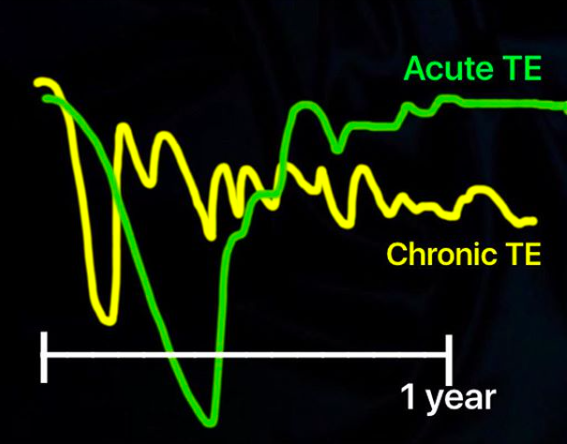
Comparison of Hair Density Over TIme in Patients with Chronic Telogen Effluvium vs Acute Telogen Effluvium. In CTE, the hair drops to a new density and then remains at that density for many, many years. in acute TE, the hair grow back once the trigger is identified.
If density keeps changing over time another diagnosis might be also present with the CTE (or present instead of the CTE).
If you are going to really come to understand a thing or two about CTE, you need to understand an important study from 2005. The study captures very nicely the essence of CTE. Professor Rodney SInclair studied five women diagnosed with chronic telogen effluvium and followed their photos for a minimum of 7 years. Four of the 5 women continued to shed year after year after year and shedding fluctuated in severity. However, serial photographs over time showed no visible reduction in hair density, and serial scalp biopsy specimen showed no follicular miniaturization. These 4 women showed no tendency toward development of female pattern hair loss or to spontaneous improvement. One woman was diagnosed with female pattern hair loss as well.
The Treatment of CTE has been discussed in our other articles (see below) and includes a vareity of growth promoting agents to true to keep hairs in the growth phase. This includes topical and oral minoxidil, low level laser, and various supplements.
Those who are interested may wish to review my previous articles on CTE.
Do I have chronic telogen effluvium (CTE) ?
Chronic Telogen Effluvium: Most patients don't develop AGA
Acute and chronic telogen effluvium - what's the difference?
Scalp symptoms (burning, tingling, pain) and chronic telogen effluvium
Chronic telogen effluvium vs Genetic hair loss - Easily confused !
Acute vs Chronic Telogen Effluvium: A Closer Look
Oral Minoxidil for Chronic Telogen Effluvium
Sinclair R. Chronic telogen effluvium: a study of 5 patients over 7 years. J Am Acad Dermatol. 2005 Feb;52(2 Suppl 1):12-6.
Hey Doc- I had a quick question. Have you seen any patients have hair loss worsened by Fin? I took fin from roman for maybe a week and had such extreme shedding immediately that I stopped. Shedding continued for 8 weeks or so and stopped but I went from a NW2 to a NW4 in that time. Do you think this will grow back? I tried Min, but the sides were bad for me and made it extremely uncomfortable. Thanks!
I have heard about shedding, but I haven’t seen it myself in my patient population so it must be rare. I gather that those who have it should stay on the medication as their is a delayed response but the response usually does happen in a couple of months.
This finding at your age suggests that you may have significantly more balding as you get older. See a doctor and build a Master Plan with that doctor that accounts for the short and long term changes that you are undergoing. Your frontal hairline needs to be examined closely by an expert.

Topical steroids are an important aspect of managing many scalp conditions. Many different topical steroid strengths from class I (strongest) to class VII (weakest) are available.
See Previous Articles
IS TOPICAL CLOBETASOL SAFE FOR THE SCALP?
WHAT TOPICAL STEROIDS ARE SAFE IN FFA?
TELANGIECTASIAS FROM USE OF TOPICAL STEROIDS
I was interested in a few reports from the last decade that mentioned the development of central serous chrorioretinopathy (CSCR) from prolonged use of topical steroids. Central serous chrorioretinopathy is associated with visual impairment, often temporary, and usually affects a single eye. It is a common retinal disease that can cause loss of vision as a result of accumulation of fluid behind the retina (subretinal) leading to localized serous retinal detachments. Males aged 20 to 50 are the most commonly affected (94 % in one 2016 study) but it may also affect women. Some studies have suggested that emotional stress, smoking, hypertension and peptic ulcer disease may be among risk factors that are sometimes (but certainly not always) present.
CSC occurring after prolonged use of topical steroids is not common. Most cases typically occurring in patients using oral or inhaled steroids.
In 2011, Ezra and colleagues in the Journal of Drugs in Dermatology reported a 25 year old male who had been using a corticosteroid ointment for 15 years. He presented to the eye clinic with vision impairment from central serous chrorioretinopathy.
In 2016, Chan et al reported 2 patients who developed CSCR in 2 patients who were using topcial steroids on limited areas of the body.
in 2018, George et al reported an interesting case where CSCR developed quite quickly. The patient was a female patient with oral lichen planus who was started on a topical steroid in the mouth (triamcinolone acetonide 0.1%). One week later, she reported with blurring of vision of both eyes. She was referred to the ophthalmologist and was diagnosed to have acute central serous retinopathy (CSR).. The topical steroid was discontinued and she was advised ketorolac eye drops (0.3%). At a follow up appointment 2-months later, there was significant improvement in her ocular condition.
Central serous chrorioretinopathy is not common but it is important that dermatologists are aware of this condition. All patients who use topical steroids and develop vision changes should be referred for a proper eye examination.
Chan et al. Localized topical steroid use and central serous retinopathy. J Dermatolog Treat. 2016 Oct;27(5):425-6. doi: 10.3109/09546634.2015.1136049. Epub 2016 Jan 29.
Ezra et al. Central serous chorioretinopathy associated with topical corticosteroids in a patient with psoriasis.J Drugs Dermatol. 2011 Aug;10(8):918-21.
Fernandez CF et al. Central serous chorioretinopathy associated with topical dermal corticosteroids.Retina. 2004 Jun;24(3):471-4.
George et al. A potential side effect of oral topical steroids: Central serous chorioretinopathy. Indian J Dent Res. 2018 Jan-Feb;29(1):107-108. doi: 10.4103/ijdr.IJDR_694_16.
Islam et al. Frequency of Systemic Risk Factors in Central Serous Chorioretinopathy.J Coll Physicians Surg Pak. 2016 Aug;26(8):692-5. doi: 2407.
I can’t comment about Europe, but we are the best traditional Scalp Micropigmentation in California here: https://scalpmicropigmentation.com/ . I just published an article about a Scalp Micropigmentation breakthrough with a new system which we just started using and are the first in North America to have it:
“We introduced a new needleless microjet injector that uses laser pulse energy to inject tattoo pigments for Scalp Micropigmentation (SMP) directly through the skin without a needle”. It also has the advantage of a one-pass use, which means that when the pigments are deposited, it is permanent and doesn’t have to be repeated.
It has the advantage of an almost painless experience, eliminating the need for anesthesia.that has no needles and does not require anesthesia. Right now, there is not much availability of this technology but I am sure it will change soon. We are offering it to a limited number of people.
Scarring alopecias are hair loss conditions that have the potential to cause permanent hair loss. Patients often have scalp itchiness and may also expeirence burning in the scalp as well. Increased shedding is common. There is a lot of misinformation about these conditions becasue all too often they are grouped in the bigger category of ‘hair loss.’ It’s too often felt that what worked for one person with hair loss should work for another person. That’s just not the case if that other person has scarring alopecia.
After treating many patients with scarring alopecia over the years, I can say that there are often signs that that tell me that a patients needs a bit of help with how they are approaching their own scarring alopecia. These may be patients who contact our office, or patients who post concerns on social media or patients who come to the office.
Treating scarring alopecia is not only about connecting patients with effective treatments but also about dispelling myths and misinformation - some of it quite strongly rooted in the mind of the patient and sometimes their doctors too. Treatments can help the patient but knowledge also heals too.
Here are these 10 signs.

Many patients with scarring alopecia tell me that they leave their doctor’s office with prescriptions but don’t know exactly what they are supposed to be monitoring until their next appointment. Alternatively (as in CLUE 3 below), they leave the office with the expectation that their hair will grow back.
Patients with scarring alopecia should be monitoring SEVEN main things at home - scalp itching, scalp burning, scalp tenderness, scalp redness, scalp pimples (pustules), hair shedding and density in various areas of the scalp. Of course, not all patients want to monitor these things and leave it up to the doctor to ask about these things at the follow up appointments. However, for those who want to actively play a role in montiroign their disease at home, we encourage them to complete the following form at home on a weekly or monthly basis
SCARRING ALOPECIA MONITORING FORM
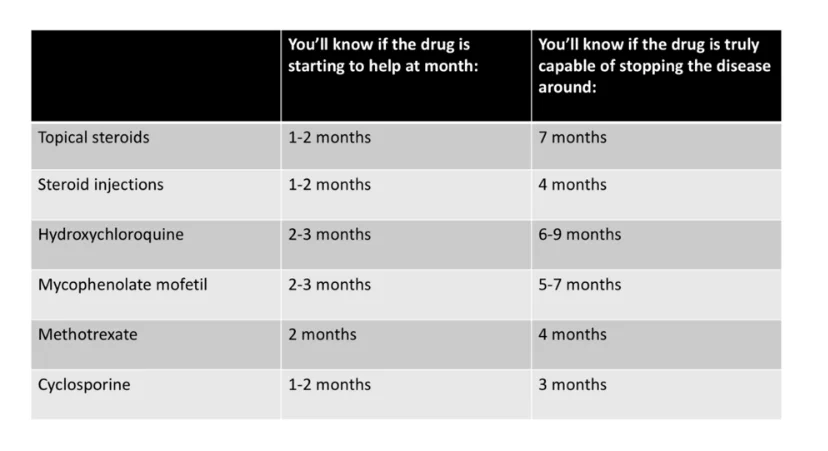
Some patients come to understand the basics of what sorts of things they should be monitoring at home. They know to keep track of scalp itching, scalp burning, scalp tenderness, scalp redness, scalp pimples (pustules), hair shedding and changes in density in various areas of the scalp. However, they are not sure when all this is expected to improve or when they are to notice a change.
It is import to review these sorts of things with the dermatologist as they may differ slightly with the exact type of scarring alopecia. I normally expect scalp symptoms to improve within 2-3 weeks and scalp shedding to improve within 2-3 months. Changes in hair density however, may take 2-7 months depending on the type of treatment that the patient has chosen.
For lichen planopilaris, for example, these changes might occur as follows (according to various treatment)
Many patients with scarring alopecia tell me that they have been doing all the things that their doctor recommended but are just not seeing an improvement. These patients are essentially telling me that they have not been educated on what it is they should expect.
While it’s true that hair regrowth does occur in many scarring alopecias, especially when treated in the early stages - the expectation should be that we STOP further hair loss rather than get new growth back. I tell patients that if they look the exact same as they do today in 6 or 12 months from now - it means the treatment is working well. Of course, I also tell some patients that a bit of regrowth might occur too. But this does not happen for everyone.
If a patient has scarring alopecia and has never every taken a photo of the scalp since their diagnosis, they are missing out on an important step. Patients simply MUST take photos at home for optimal management. Of course, the doctor should take photos in the office but not all do. In today’s busy world, patients simply must be their own advocate and must take photos themselves or get someone else to take them.
When a patient of mine emails our office and says they are doing worse, the first thing I want to see is photographs.
Photos should of course be taken of the areas of hair loss, but should also be taken of normal appearing areas in the event these are slowly changing or in the event loss occurs in the future.
A patient who has never taken photos of their scalp needs to be educated on the importance of this step in scarring alopecia.
Most patients with scarring alopecia react to their hair loss by shampooing less often. Many of these patients develop worse and worse seborrheic dermatitis on account of shampooing less and less. Some even develop thick scale in areas (pityriasis amiantacea) that traps bacteria and other microorganisms and worsens inflammation. In addition, some patients who shampoo less and less start to see more and more hair coming out after showering which prompts them to shampoo the scalp even less. A vicious cycle sometimes develops. For example, a patient who shampoos the hair once per week is going to see a lot more hair loss compared to if they shampoo the scalp daily.
I recommend that patients with scarring alopecia be gentle on their scalp but generally speaking shampooing every 2-3 days is appropriate for those with fine or straight hair and shampooing every 4-6 days is appropriate for those with curly hair. If seborrheic dermatitis is present, an anti-dandruff shampoo should be added to the shampooing routines. It thick scale is present, a salicylic acid based shampoo may be needed to help lift the scale.
Corticosteroids are the mainstay of treatment for many types of scarring alopecia. That’s not to say by any means that they are the most effective treatments. Not at all. However, for most types of scarring alopecia, especially lichen planopilaris, frontal fibrosing alopecia, discoid lupus, pseudopelade, they are a an improtant treatment to consider given their relatively safety and reasonable effectiveness.
A patient who has never used a topical steroid is quite likely to be misinformed, or poorly educated about their scarring alpecia. On average. Of course, there are exceptions. Yes. But we are talking averages here. A patients who has used this supplement or that supplement in hopes it will help their scarring alopecia or done this cosmetic non sense or that cosmetic non sense but has never used a topical steroid is all too common.
The purpose of this article is to help patients and physicians recognize the clues of being off track with treating scarring alopecia - and this is certainly one of them.
Many scarring alopecias are diseases of the immune system of the body. Yes, it’s true many just have effects in the scalp (and the rest of the patient is perfectly healthy. But not all. We know that many scarring alopecias are associated with an increased chance of having blood test abnormalities - including thyroid abnormalities and low vitamin D. If a patient has not had blood tests since their diagnosis, they need them. Plain and simple. The basic tests are CBC (blood counts), TSH (thyroid studies) and ferritin (iron storage) and 25 hydroxyvitmain D (vitamin D status). Yes, other tests might be needed too - but these are the four basics that everyone needs. If a patient has never had blood tests, they are not quite on track yet.
This one often prompts some to take offence, but it should not. Many physicians treat hair loss and do a great job. Many hair transplant surgeons treat hair loss and do a great job. Many endocrinologists treat hair loss and do a great job. Many trichologists treat hair loss and do a great job. But most scarring alopecias are best handled by dermatologist.
A hair transplant surgeon, general practioner, endocrinologist and trichologist are not equipped with the tools to fully battle this group of diseases. A hair transplant surgeon does not usually prescribe systemic medications. For example, it’s rare that a hair transplant surgeon prescribes hydroxychloroquine, mycophenolate, cyclosporine, isotretinoin, clindamycin, rifampin. Are these really needed sometimes? They most certainly are.
A hair transplant surgeon treats hair loss with surgery and surgery is never ever an option in the early stages of scarring alopecia. An endocrinologist may have great strategies for some cases of female pattern androgenetic alopecia and may offer minoxidil, spironolactone and other systemic hormonal based options. But no, most endocrinologists don’t prescribe systemic medications for scarring alopecia and do not have the experience to monitor these systemic medications in the setting of scarring alopecia.
I’ll leave this topic now, but it’s one I feel strongly about. The only physician group with advanced skills to battle scarring alopecias are dermatologists. The exception of course would be physicians with advanced training in the field of hair loss dermatology. It’s simple. Yes, this concept rubs some the wrong way. But it shoud not. Patients are confused with available treatments. Bold statements are needed to help patients. And my primary concern is to help patients. The vast majority of patients with scarring alopecias are best treated by a dermatologist.
It’s common for a patient to tell me they are using this treatment and that treatment. This vitamin and that vitamin. Many go on to say they are using something their hairdresser gave them or something they ordered from the internet, but they are not sure what it is.
If a patient is using something that they don’t know what it is, they need to stop. The treatment of scarring alopecia is a finely tuned process. At every single step, we need to know what we are doing. Taking things that one does not know what it contains is unsafe.
The immune system however, does know what the patient is taking - and so does the rest of the body. Some treatments activate the immune system, some have no effect and some actually weaken it. This includes natural products, herbs and random supplements.
Patients who find themselves buying more and more treatments from the internet are probably not on track. This supplement, that supplement - it probably does nothing in the case of scarring alopecia. Fancy packaging and elevated prices are not associated with a great chance of helping scaring alopecia.
Do I ever recommend various supplements? Sure. Some may have benefit in non scarring alopecias, especially those associated with increased shedding (telogen effluvium). Rarely do they help scarring alopecia.
If a patient is increasing turning to amazon or various online website stores for options for their hair loss, it’s probably an indication that they should be seeing a dermatologist who treats scarring alopecia.
There is a great deal of misinformation about scarring alopecias out there in the world. After treating many patients with scarring alopecia over the years, I can say that there are often signs that that tell me that a patients needs a bit of help with how they are approaching their own scarring alopecia.
I feel strongly that patients need to know what it is they should expect and how best to monitor their scarring alopecia. Not everyone follows there symptoms like our chart enables them to, but I certainly encourage patients to take photos. Everyone with primary scarring alopecia needs blood tests and there simply are no exceptions. Some types of scarring alopecia may need more tests than others, but everyone needs blood tests. Most patients with scarring alopecia benefit by a visit with a dermatologist. it’s true that future appointments and ongoing monitoring may be handled by many different types of specialists, but scarring alopecias are fundamentally dermatological diseases. I understand that it can be difficult to access a dermatologist in many parts of the world. It still does not change the view that dermatologists are the group of physicians with the skills to battle the toughest cases of scarring alopecia.
Treating scarring alopecia is not only about connecting patients with effective treatments but also helping dispel myths and misinformation. Helping the patients starts with education - long before I reach for a prescription pad.
My best alternative for my hair loss is to get a Hair Transplant. However I have read various news from the internet and I came down to these conclusions:
It is permanent however you would need to get another hair transplant in the future if you want more density.
My hair transplant doctor says you do not need to take any medications, treatments. For my case, and that is exactly what I want to do but alot of internet topics suggested to take minoxidil, rogain, finasteraide, proprecia, prp to keep the existing hair for the rest of your life if you do not want to lose anymore hair.
I wear toppik and have 1 picture of my current hair.
I would consider a hair transplant if all I had to do was 1, and no medications were required. Is it possible or are you in a endless cycle of multiple transplants and a lifetime supply of treatments.
You discussed endless cycles but at 20, the reality is that repeated hair transplants every year until your balding becomes stable is a awful endless cycle, see here: https://newhair.com/baldingblog/22-year-old-received-a-hair-transplant-of-2800-grafts-from-reddit/

The Best in Beauty Trends, Tips & Tricks on Everything from Hair & Makeup & Best Kept Skin Care Secrets, Long Luscious Hair & Rosy Cheeks.

Acne may be a dreadful drawback for several folks. It will ruin your look on the surface, and it may also ruin your authority on the wit...
